Ready
4
Round 1 / 4

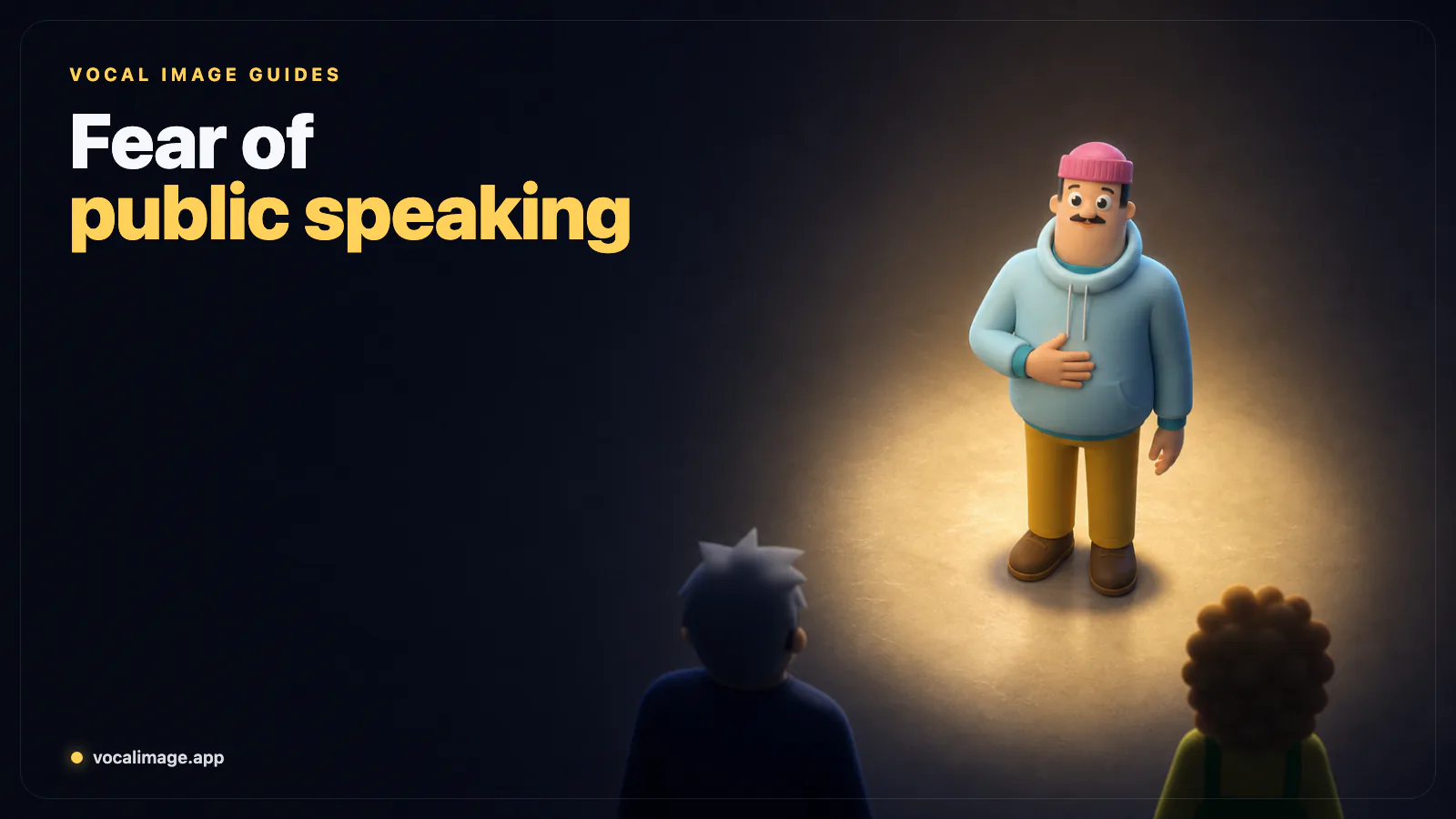
The fear of public speaking — glossophobia, if you want the term — is regularly reported as more common than fear of death, which produces the old joke that at a funeral, most people would rather be in the casket than giving the eulogy.
The joke hides the useful fact: this fear is near-universal because it's wired in, not because something is wrong with you. And it's one of the most treatable fears there is — not with courage, but with physiology and reps.
To your ancient threat-detection system, standing alone in front of a watching group is textbook danger: all eyes on you, separated from the tribe, being evaluated. It responds the only way it knows — adrenaline. Racing heart, shallow breath, shaking hands, dry mouth, cracking voice, blank mind.
Two things follow from this. First: your fear is not evidence you're bad at speaking; it's evidence your alarm system works. Second: you can't think your way out of an adrenaline response — but you can breathe your way out, because breath is the one lever of the stress system under voluntary control.
1. Long exhales — 2 minutes. Inhale 4 counts, exhale 8. The extended exhale activates the parasympathetic system — the physiological brake. This is the highest-value 2 minutes available to a nervous speaker, and it works during a talk too (exhale slowly while advancing a slide).
Try it right now: the breathing widget on this page runs the exact pattern. Four rounds, one minute. Notice your shoulders.
2. Warm the voice — 1 minute. Hum, siren up and down, say your first line once out loud. Cracks and shakes live in cold voices; see the anti-crack warm-up.
3. Reframe the symptoms — 30 seconds. Racing heart before speaking is physiologically near-identical to excitement. Research on "anxiety reappraisal" found that people who tell themselves "I'm excited" — out loud, even — perform measurably better than those who try to calm down. You're not suppressing the arousal; you're relabeling it.
4. First sentence, memorized — always. Panic loves a blank start. Have your opening sentence word-for-word — just that one — and the momentum carries you into sentence two.
Every time you dodge a speaking moment, your brain logs it as "escaped danger" — and the fear grows. Every time you speak and survive (even badly!), it logs "that was survivable" — and the fear shrinks. This is exposure, the mechanism behind every effective phobia treatment, and it means the path out is through — but through small doors:
Two to three months of laddering typically moves someone from "call in sick" to "fine, I'll present." Not fearless — functional. Fearless isn't the goal; even veteran performers report pre-show nerves. They've just stopped interpreting them as a stop sign.
If public-speaking fear comes with panic attacks, or the avoidance is shaping your career (declining roles, skipping classes), that's social anxiety territory where a therapist — particularly CBT, which has excellent results with glossophobia — beats any article. No shame in it; it's the same exposure mechanism with professional support.
How confident do you actually sound?
Speak for 30 seconds — AI scores your pace, clarity, and filler words. Free, no sign-up.
The fear of public speaking — from Greek glossa (tongue) + phobos (fear). Surveys consistently place it among the most common fears, affecting most people to some degree.
